
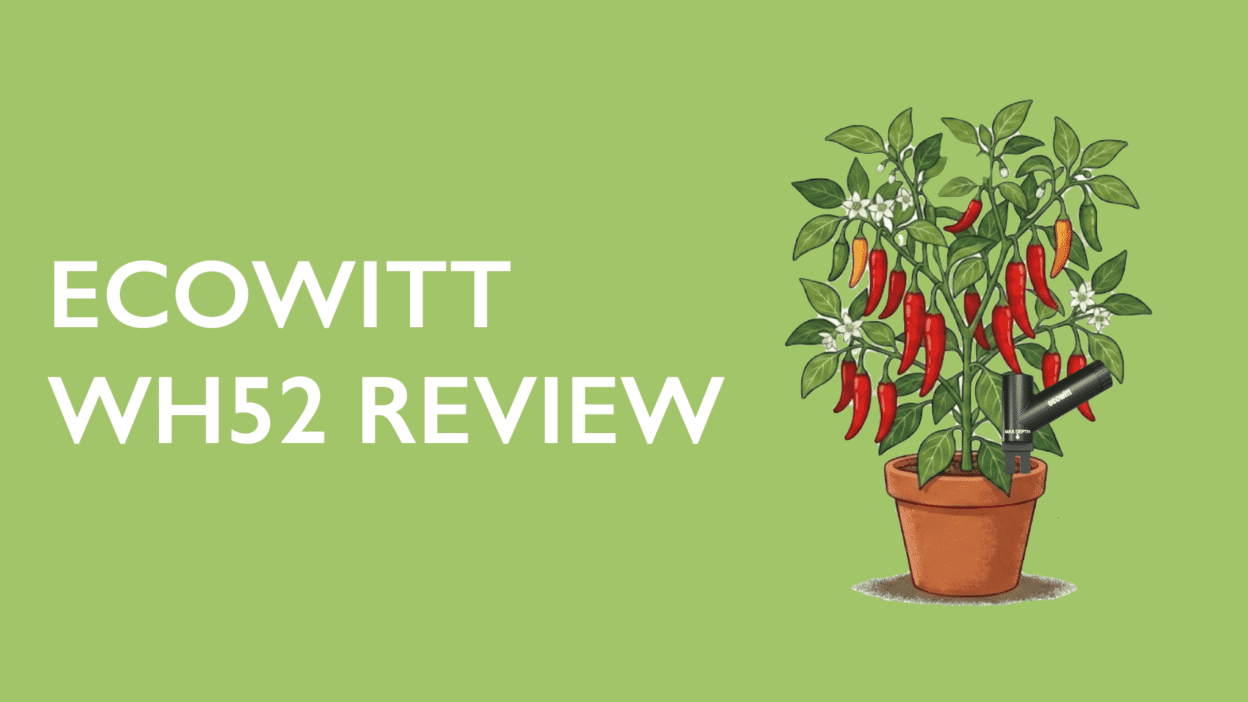
The Ecowitt WH52 Soil Moisture, Temperature & EC Sensor is a wireless smart soil sensor designed to help gardeners better understand what is happening below the surface of the soil where plant roots live.
Rather than relying on guesswork or simply touching the top of the soil with your fingers, the Ecowitt WH52 continuously measures conditions around the roots and sends the information wirelessly to a compatible Ecowitt weather station gateway. This allows the monitoring of plants in real time and better decisions about watering and feeding.
Contents
What is the Ecowitt WH52?
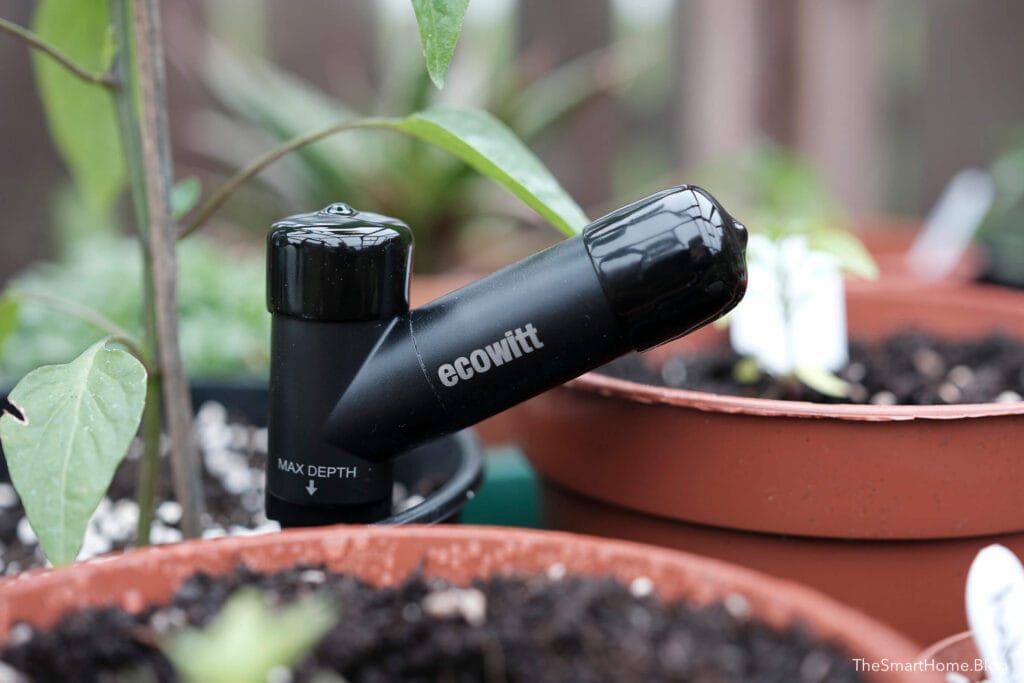
The Ecowitt WH52 measures three important soil variables: soil moisture, soil temperature, and electrical conductivity (EC). Soil moisture readings tell you how much water is available around the roots.

This is far more useful than judging the surface appearance of soil, because the top layer can often look dry while the deeper root zone is still damp or the opposite. Soil temperature readings help gardeners understand whether the soil is warm enough for healthy plant growth.
Many vegetables and fruiting plants slow down dramatically if the soil is too cold, even when daytime air temperatures feel pleasant. The third measurement, electrical conductivity, is one of the most useful features for serious gardeners because it gives an indication of nutrient and fertiliser levels dissolved in the soil water.
In simple terms, EC helps show whether plants may need feeding or whether too much fertiliser has built up around the roots.
The sensor updates readings roughly every 70 seconds and can transmit data wirelessly over distances of around 100 metres in open conditions. It is designed for outdoor use with an IP66 weather-resistant rating, meaning it can handle rain and garden conditions without problems.
Battery life is typically specified as a minimum of 12 months, although this will vary depending on usage and environmental conditions. The sensor will also integrate with smart home systems, weather dashboards, and automation platforms when used with a compatible Ecowitt gateway/hub [Ad] and supported third-party services.
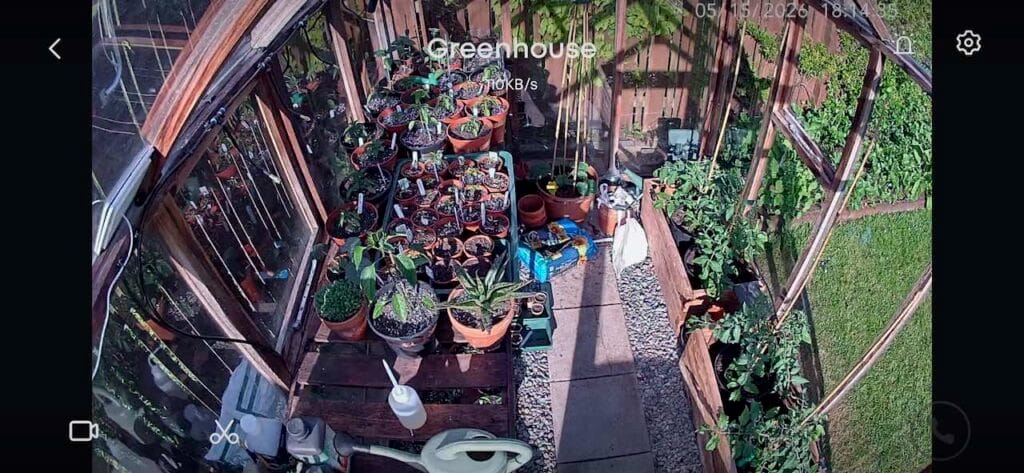
We currently run 2 WH52 and 3 WH51 sensors in our greenhouse. The Ecowitt WH52 on Amazon [Ad]
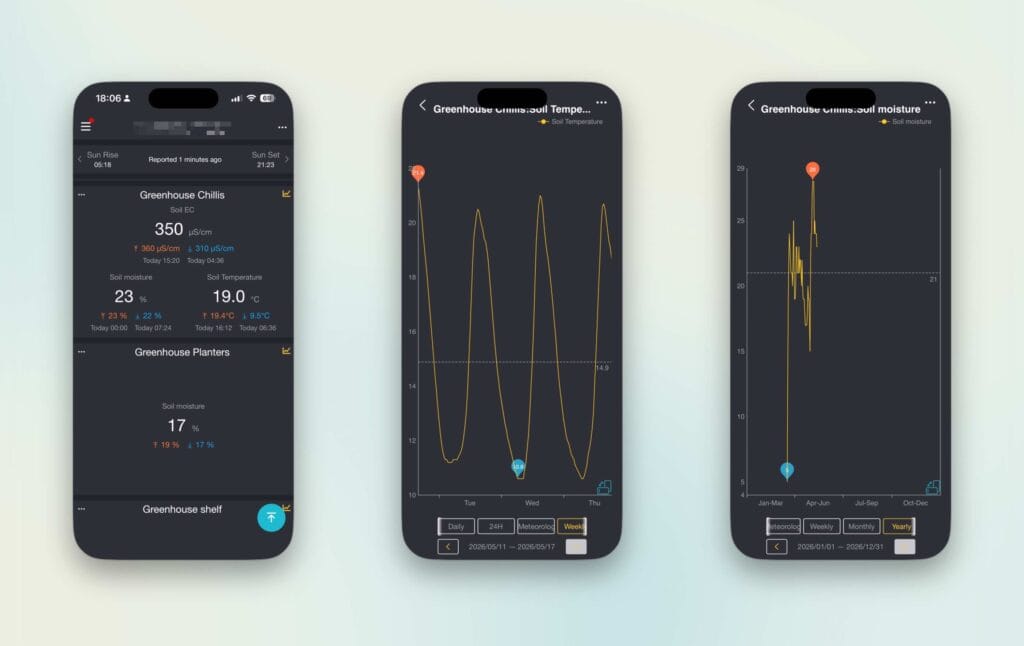
This makes it useful not only for hobby gardeners but also for greenhouse growers and people using automated irrigation systems. At the point of writing (unlike my other Ecowitt sensors) I haven’t managed to get data from the Ecowitt WH52 in Home Assistant, this will no doubt come in time.
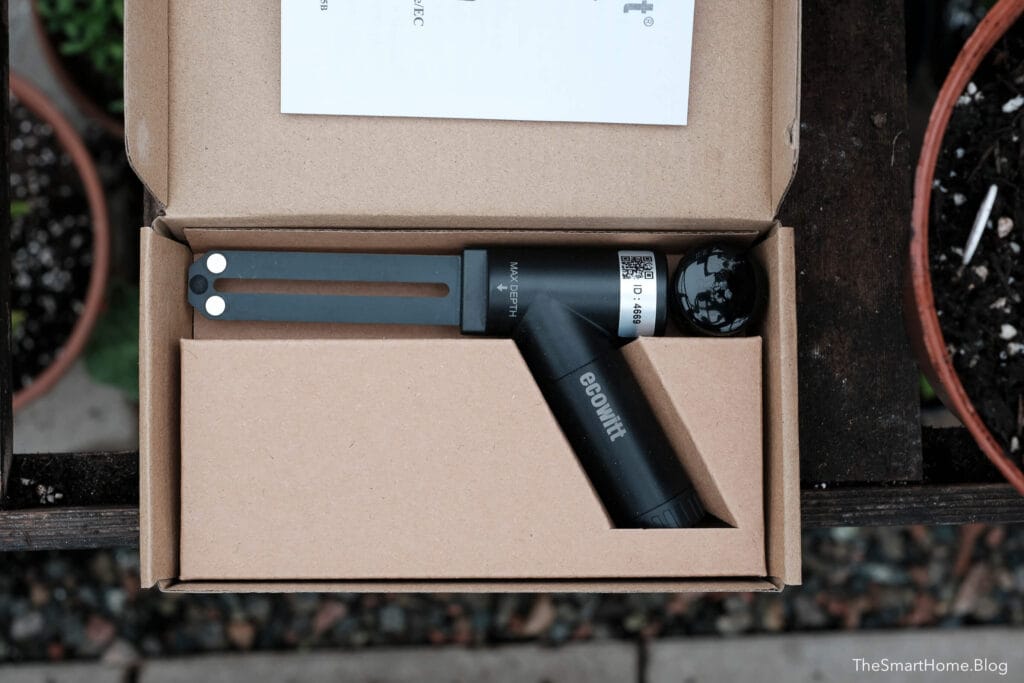
The Ecowitt WH52 comes with two rubber caps, one for the top of the device and the other for the battery door.
The Overwatering Challenge
One of the biggest advantages of the Ecowitt WH52 is that it helps prevent overwatering, which is one of the most common mistakes gardeners make. Many plants suffer more from too much water than too little.
Overwatered soil contains less oxygen, which can lead to weak roots, fungal disease, and poor growth. Fighting the temptation to water is overcome through data. It was only when I was repotting plants last year did I discovered the swamp that lay under the dry soil surface.
Because the Ecowitt WH52 measures moisture directly around the root zone, gardeners can water only when the plant genuinely needs it. This saves water while also improving plant health. On the other hand, the sensor also helps prevent underwatering during hot weather or when growing plants in containers that dry out quickly.
For tomato plants, the benefits are particularly noticeable. Tomatoes generally perform best when soil moisture is kept as even as practical, rather than swinging between very wet and very dry conditions. Large fluctuations in root-zone moisture can contribute to issues such as fruit splitting and can increase the risk of blossom end rot (a problem commonly linked to interrupted calcium uptake during periods of moisture stress).
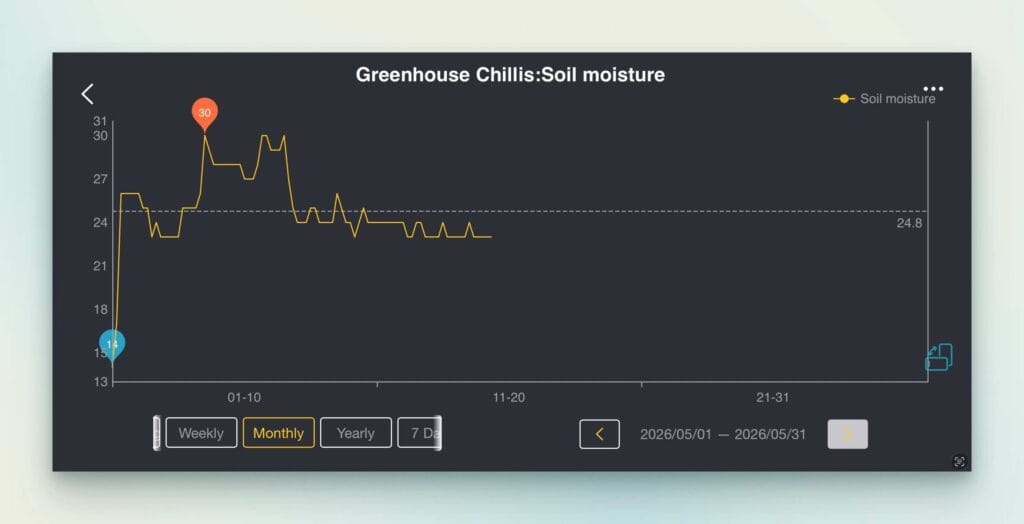
By using the Ecowitt WH52, you can monitor when the root zone is drying and water before the plant becomes stressed. Soil temperature readings are also valuable in spring because tomato roots grow slowly in cold soil.
Even if the greenhouse or outdoor temperature feels warm during the day, cool soil can delay growth and reduce nutrient uptake. The sensor allows gardeners to identify when conditions are truly suitable for planting or feeding.
The Ecowitt WH52 on Amazon [Ad]
Ecowitt WH52 The Chilli Farm
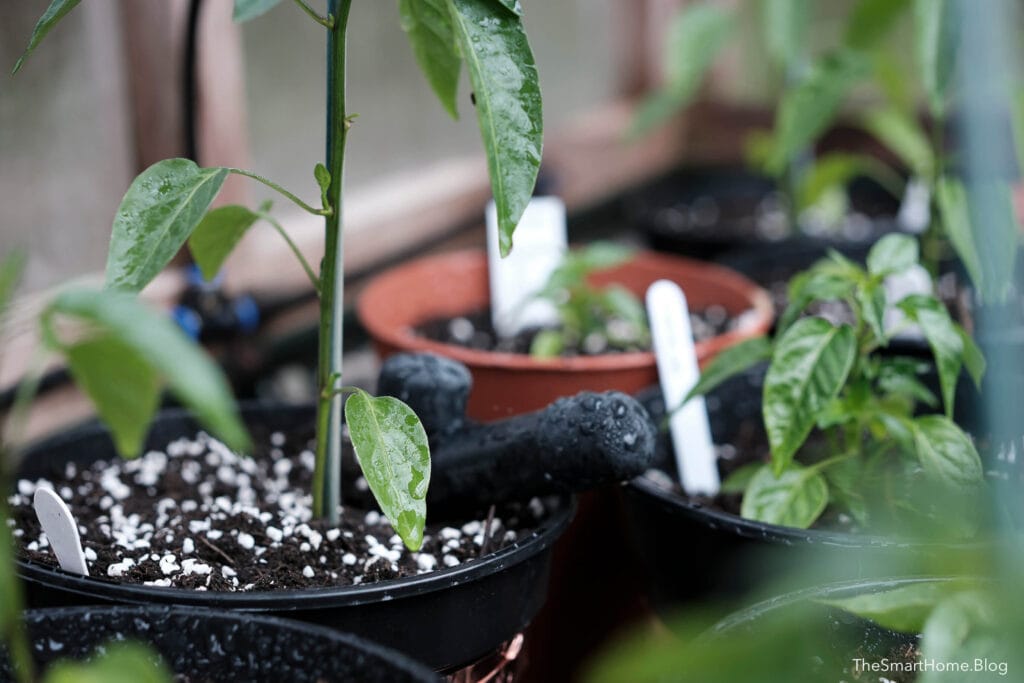
Calling 20 chilli plants a farm is a stretch, but that’s what we call it. Chilli plants also benefit from the data provided by the Ecowitt WH52. In containers, chillies typically do better when the compost is allowed to dry slightly between waterings rather than staying constantly saturated.
Persistently waterlogged compost reduces root oxygen and can lead to root health problems. By checking the moisture readings, growers can time watering more consistently and avoid my “just in case” watering especially while plants are still establishing.
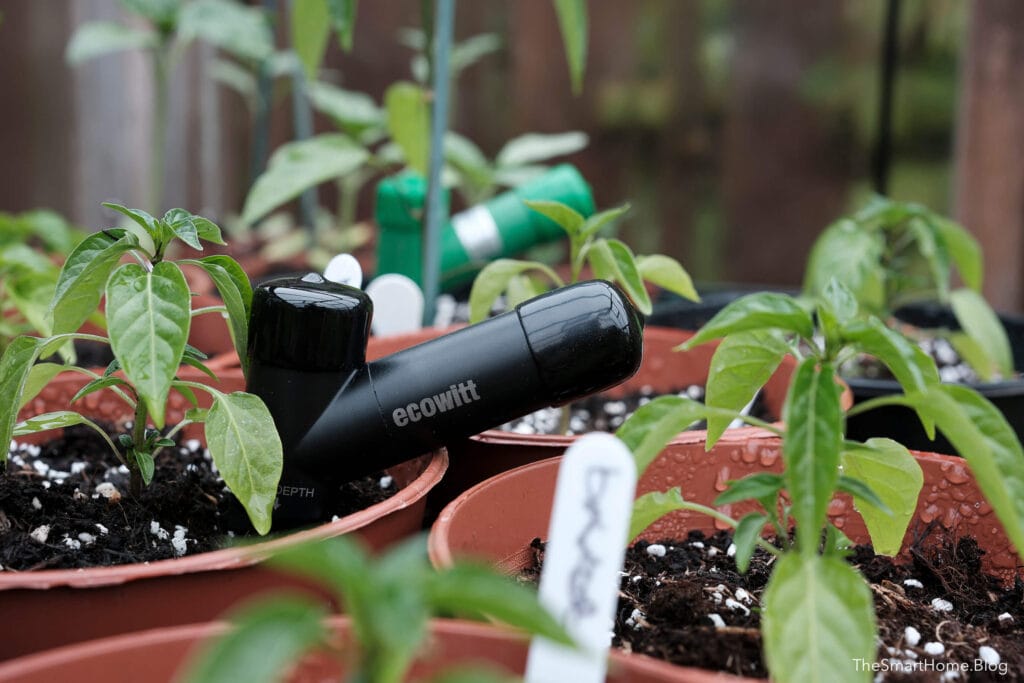
The EC readings can be useful for chillies because they give an indication of the concentration of dissolved salts in the root zone (often influenced by fertiliser). If EC rises unusually high for your growing mix and feeding routine, it can indicate a build-up of salts, which may stress roots and reduce growth or yield. Monitoring EC can help gardeners fine-tune feeding and, where appropriate, flush containers occasionally to avoid excessive salt accumulation.
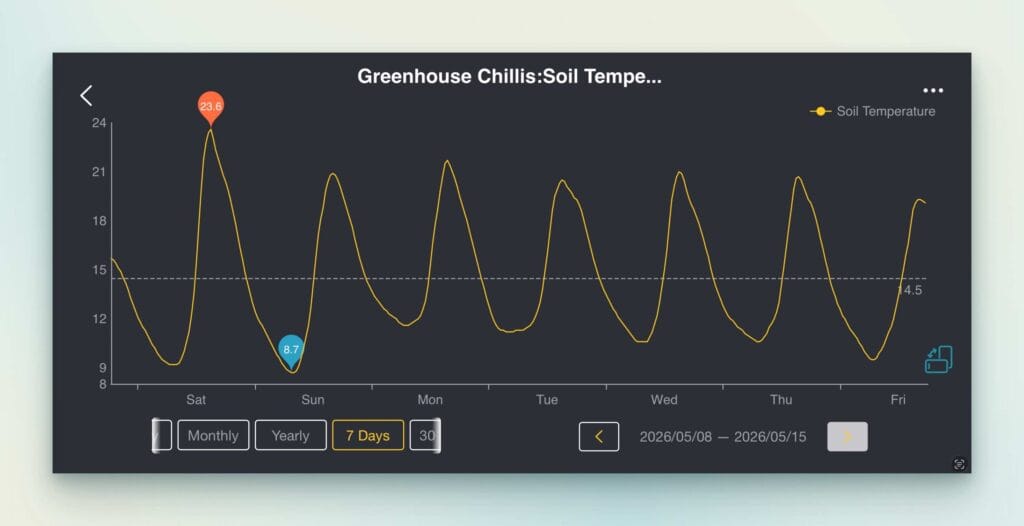
Another major benefit of the Ecowitt WH52 is that it provides trends over time rather than isolated readings. You can see how quickly soil dries during hot weather, how rainfall affects moisture levels, or how nutrients change after feeding.
This long-term information allows for much better decision-making than occasional manual checks. It also makes the sensor particularly useful for raised beds, pots, greenhouse growing, and automated irrigation systems where conditions can change rapidly.
The Smart Home Automated Watering System
See our post on our smart home greenhouse. Just to be clear we are very much novice gardeners growing tomatoes and chillis so please do take this as expert advice.
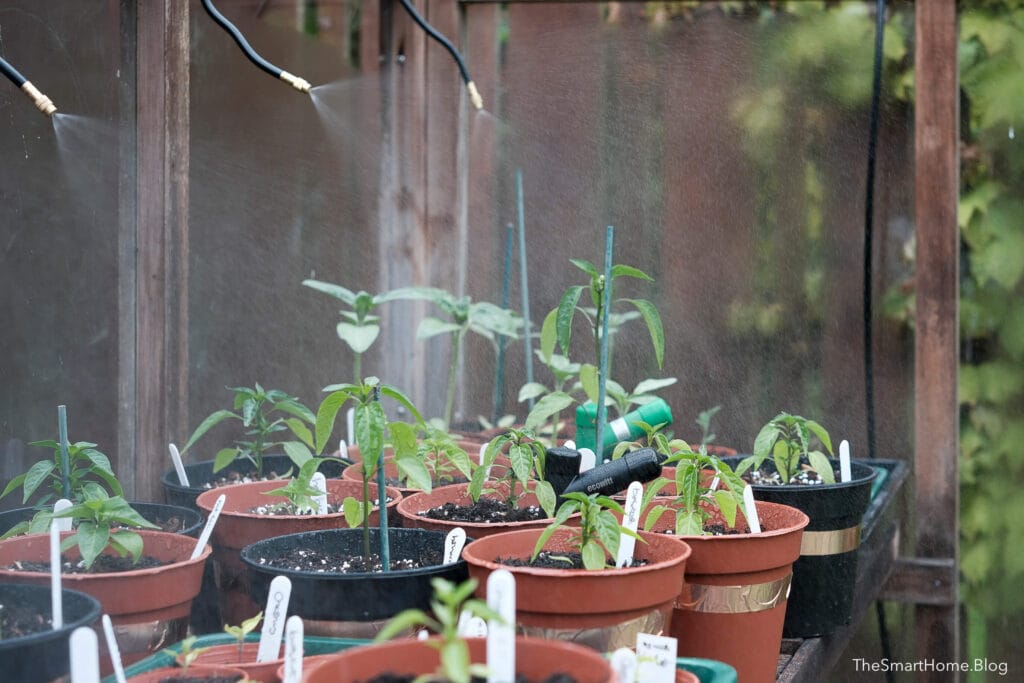
A very effective automation setup using the Ecowitt WH52 Soil Moisture, Temperature & EC Sensor together with our separate temperature and humidity sensor [Ad] is to create a “smart watering window” rather than watering on a simple timer.
Traditional irrigation timers water regardless of whether plants need it, which often wastes water or causes overwatering. By combining soil and environmental data, watering only happens when the plants are genuinely under moisture stress.
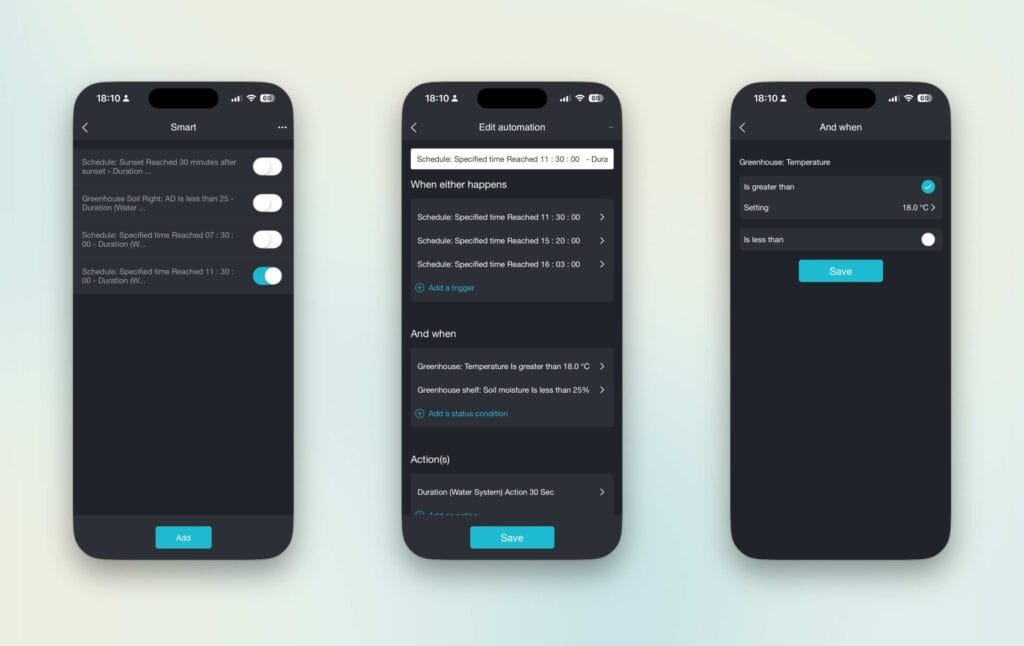
Ecowitt WH52 in Automations
For example, a good automation for tomatoes or chilli plants in pots, raised beds, or a greenhouse could work like this:
Note: Soil-moisture “%” values are not universal across all compost/soil mixes and sensors. The best thresholds depend on your potting mix, pot size, sensor depth/placement, and plant size so treat the numbers below as starting points and adjust based on how your plants respond.
- Only water when soil moisture drops below a chosen threshold
- Only water during safe temperature conditions
- Be cautious about watering when humidity is already very high (especially if airflow is poor)
- Stop watering once the target moisture level is reached
Our (slightly experimental) practical rule looks something like this:
One example starting point might be: water when soil moisture falls below about 28%, greenhouse temperature is above 18°C, and humidity is below 85% then adjust the thresholds over time based on how quickly your pots dry and how the plants respond.
This works well because the plants are only watered when they are actively using water. If the air is cool or very humid, evaporation and plant transpiration slow down naturally, meaning the plants need less water. Watering during these periods can keep the soil too wet for too long.
For tomato plants specifically, maintaining more stable moisture levels helps reduce issues such as blossom end rot and split fruit. Tomatoes generally prefer evenly moist soil, so an automation could aim to keep soil moisture between roughly 30% and 45%. The system might start watering at 30% and stop at 42%. This creates a steady moisture range without keeping the soil permanently saturated.
Chilli plants usually prefer slightly drier conditions, so their automation could use a lower moisture threshold. For example: Start watering when moisture falls below 22% and stop at 35%. This slight drying cycle encourages stronger root development and helps avoid fungal issues that chillies are prone to in overly wet compost.
Adding the separate temperature and humidity sensor improves the automation significantly because plants lose water faster during hot, dry conditions. A more advanced automation might increase watering frequency automatically on hot summer days. For example:
- If air temperature exceeds 30°C and humidity falls below 40%, increase watering duration by 25%.
- If humidity exceeds 90% overnight, delay watering until morning to reduce fungal disease risk.
Another excellent safeguard is to prevent watering during very cold soil conditions. Many warm-weather plants, including tomatoes and chillies, struggle in cold wet soil because roots become inactive. A useful rule would be:
As a general safeguard for warm-season plants consider avoiding irrigation when soil temperature is very low (for example, below ~12°C) unless moisture is getting critically low then refine this based on your crop stage and how quickly your growing medium drains.
This prevents cold, damp root conditions that can lead to root rot and slow growth early in the season.
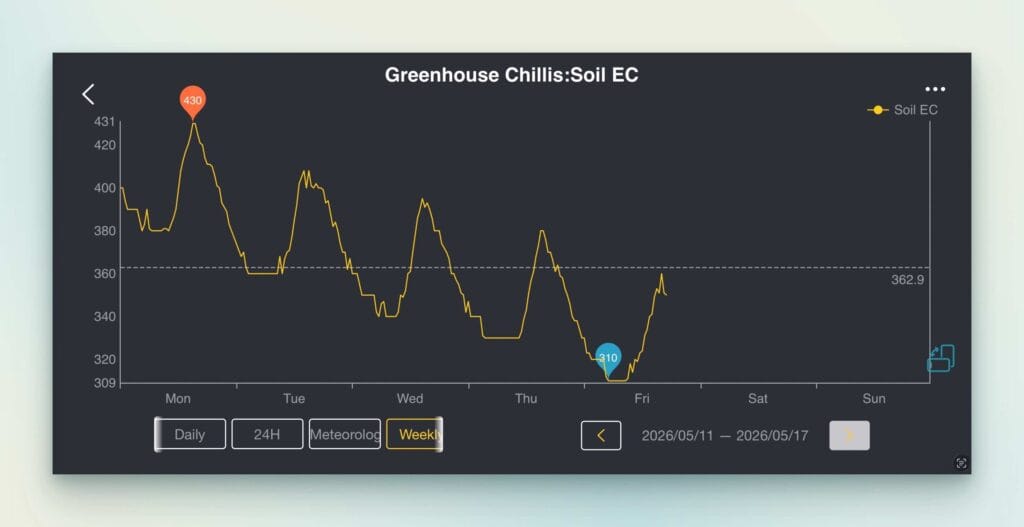
The EC (electrical conductivity) reading from the Ecowitt WH52 can also be included in more advanced automations. For example, if EC levels become unusually high, the system could trigger a deeper flushing irrigation cycle to wash excess fertiliser salts away from the roots. This is especially useful in greenhouse growing where nutrients can build up over time in containers and raised beds.
The biggest benefit of this type of automation is consistency. Plants receive water based on actual growing conditions instead of fixed schedules. This leads to healthier root systems, more stable growth, improved fruit production, and lower water usage. For crops like tomatoes and chillies, which are sensitive to inconsistent watering, this can make a very noticeable difference in plant health and harvest quality.
Ecowitt WH52 Conclusion
In simple terms, the Ecowitt WH52 acts like a constant health monitor for the soil around your plants. Instead of guessing when to water or feed, gardeners can make informed decisions based on real data. This not only improves plant growth and yields but can also save water, reduce fertiliser waste, and help avoid common gardening problems before they become serious.
Links
The Smart Greenhouse
Ecowitt Wittboy Weather Station Review
Eve Aqua, Matter Smart Watering System
The Smart Home Blog on Instagram
Amazon Affiliate Links:
As an Amazon Associate, I earn from qualifying purchases:
The Ecowitt WH52
Soil Moisture Sensor WH51
Micro irrigation system
2026 Irrigation System
The Wittboy Weather Station
The Ecowitt Temperature Sensor
The Ecowitt Irrigation Timer
Mounting Pole
Ecowitt Gateway
Ecowitt WH51
Temperature Senor WH31

Discover more from The Smart Home Blog
Subscribe to get the latest posts sent to your email.